Government Contracting Steps To Take

LOOK!!! 

Join us for a FREE online Q&A about Government Contracting for Small Business

When? May 17, 2022 @ 10am

Today’s blog, part 2 of Government Contracting for Small Business, will help you understand the steps you need to take to get a government contract.

It’s not too late to get more information!  Click HERE to find out more!


How can I get a government contract?

With the time it takes to secure an award, it may be several years before profits offset the investment spent in obtaining contracts. Utilizing the knowledge of a professional at Paris SBDC or the SBA is a good way to navigate obtaining government contracts and save time.

  • Start small: Once you have identified the products and services an agency is looking for, it is best to start small.
  • Develop a track record with smaller agencies and local awards. Going for big dollar awards at the federal level may put your company in over its head while trying to meet the deadlines and production levels required.
    • Remember, the government tends to go with what they know or are familiar with. Early development can help get your foot in the door to bigger opportunities through creating reliability and recognition.
  • Focus your approach: There may be eight or ten areas where you feel your company can apply for an award. Work on two or three possible contracts where your business excels in quality, not just competitive pricing.


How to prepare your proposal for a government contract:

On the SAM.gov site there are three types of proposals:

  • Request for Quotation (RFQ): While typically used for a more simplified government contract of $150,000 or less, the information requirement may be greater. The SAM.Gov site offers advice for RFQ’s.
  • Request for Proposal (RFP): This applies to larger, negotiated acquisitions. There can be some give and take as the process unfolds until the government agency and prospective vendor come to mutually agreed pricing and terms.
  • Invitation for Bid (IFB): This is a sealed solicitation for government procured contracts.

Keep in mind, there is no negotiation, and the submitted proposal is considered final. The price point is often the difference seen between the qualified bidders. A few more things to do before you submit your proposal:

  • Get your paperwork in order: With strict guidelines and regulations, having complete, accurate paperwork is paramount to winning an award. Don’t second guess, ask questions if necessary and above all, leave nothing out.
  • Build relationships: An agency liaison or point of contact may help build company awareness.
    • Connect with agency decision makers through procurement conferences, industry events and contract matchmaking events.
    • Connect with a bid matching service. More than three hundred local Procurement Technical Assistance Center (PTAC) offices serve the country. Find one near you at APTAC. You can also obtain a private service for a more detailed approach to procurement matching.


What are the easiest government contracts to get?

A one-person business owner with little track record is not likely to be awarded a government contract. If you are starting small, consider contracting with a larger company that already has work with the government.  While most contracts tend to go to those with a foot in the door, subcontracting with a winning bidder is a way to gain necessary experience, building that all-important track record and move up the rankings.

With that in mind, there are some government projects that are too small and often overlooked. Check the SAM.Gov site for janitorial, plumbing trades, and even painting procurements. Word has it, if you work hard, even at a loss with the goal of bigger contracts, you can get a foothold to greater awards even at this level.


What is a GSA vendor and how do I get one?

A GSA or General Services Administration approved vendor are qualified companies that go through the GSA schedule acquisition process.  Follow the earlier step listed here to gain a SAM.gov registration number. Next:

  • Check your eligibility
  • Be prepared to provide three contractor performance assessment reports or 3-5 customer references.
  • Provide complete statements of work and projects for similar projects.
  • Products must be Trade Agreements Act (TAA) compliant, from an approved TAA country.
  • Business must have fair and reasonable pricing.
  • Verify that you are not disbarred on the SAM.gov site.

Once you meet these qualifications, contact a GSA consultant, and start the Multiple Award Schedule Offer Process.


Don’t forget to get more information!

Gregory James, of UTA Cross Timbers Procurement Center gave an online Q&A addressing general questions on:

• Government set asides
• Minority owned business
• 8a certification
• Government bid process
• Criteria with Cross Timbers
For more information from the experts in government contracting, please contact Gregory James, of UTA Cross Timbers Procurement Center!
Want even more information?  Check out our resource center for more on Government Contracting!

For additional information on government contracting, how they work, the steps to take, or how to get a government contract, please contact us at the Small Business Development Center – SBDC – Serving Paris area:  Lamar, Hunt, Hopkins, Delta, and Red River counties.

Savings and Retirement for Small Business Owners

“I want to work forever and never retire!” Said No One, Ever

As a small business owner, your end-goal was probably not to work forever, but have you really thought about retirement? A recent business survey of 2,000 small business owners revealed that one-third of entrepreneurs don’t have a retirement plan. It doesn’t matter if you are just starting out as a small business owner, or if you are nearing retirement, you need to think about your “exit strategy” and how you can retire comfortably. In today’s blog, we’ll talk about a few key strategies for building up retirement capital.


How small business owners save for retirement:

You are probably more familiar with reinvesting your profits back into your small business, than investing in your own future retirement. However, start thinking about your own retirement as a required business investment. Here are some ideas of how to save for retirement:

  • Set a solid goal
    • How much will you need to retire?
    • How long do you have until you would like to retire? (May be different than when you CAN retire.)
    • What will you do once you have retired?
      • If your goal is to travel, will you need additional funds?
      • Have you planned for a retirement home or assisted living?
    • What is your exit strategy?
      • Will you sell your business, or will someone take over?
      • Will you shut your business down in order to retire?
    • Build your support team
      • Make sure your financial advisors are on board with your plans
        • CPA
        • Financial Advisor
        • Insurance Advisor
        • Attorney
      • Decide how to invest and which programs you will use
        • Traditional IRA or ROTH IRA
        • Individual 401(k)
        • SEP IRA (Simplified Employee Pension Plan)

How can I save money for retirement when my small business is barely breaking even?

We know it sounds impossible: you can’t imagine saving money for retirement (or for emergencies) when you are running a very small profit margin (or even a loss). However, starting with the mindset of paying yourself first will go a long way in helping you achieve your retirement goals.


Pay yourself first!

The “Golden Rule” of successful entrepreneur’s states that you must pay yourself first. Before you pay any bills, employees or landlords…pay yourself first. Think of a personal savings as the first bill you must pay each month. You can even start small, say $100 each payday and put that money away in savings and a portion in a retirement plan. Overtime the amounts will add up and you’ll not only have an emergency fund, but you’ll have planned for your retirement.


Why should I pay myself first?

Dave Ramsey III is an American personal finance specialist who’s budgeting advice is world-renowned. He will tell you that paying yourself first sets up not only a monetary reward, but a psychological reward as well. When you pattern your brain for savings, you’ll achieve your goals. While we won’t get into Dave Ramsey’s steps to success, (although you should look them up!) we will tell you the advantages of paying yourself first:

  • It sets proper priorities
  • It’s easy (especially if you start out saving and it becomes automatic)
  • You can take advantage of the Dollar Cost Averaging (think retirement plans that grow)
  • It creates a health work/reward cycle
  • Saving first models proven financial strategies for success


How to get a tax credit on my Solo 401(k):

Did you know you can get a great tax credit for starting a 401(k) plan that benefits you and any team members that take advantage of the opportunity? Under the SECURE Act, small business employers can receive a tax credit (up to $5,000 per year).


For additional information, resources and tips on how to save for retirement; or for more information on retirement plans available to small business owners, please contact us at the Small Business Development Center – SBDC – Serving Paris area:  Lamar, Hunt, Hopkins, Delta, and Red River counties.
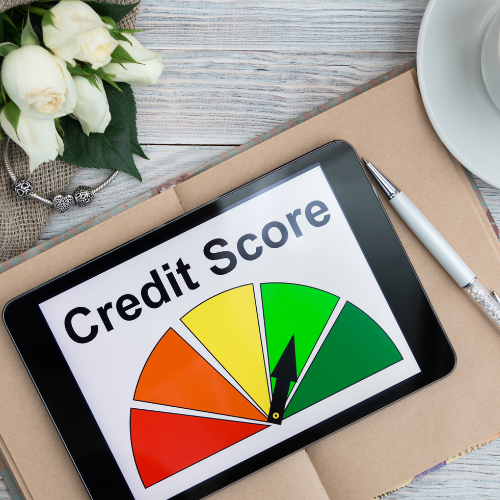
 

Credit Score

Small Business Credit Scores – Credit Reports

It’s fair to say that most individuals have heard of a credit score and what it means when it comes to the ability to obtain credit, receive a loan, or purchase a car or house. Did you know however, that businesses have their own credit scores? In today’s blog, we’ll talk about small business credit scores, how to find your score, and what your credit number means.


What is the difference between personal and business credit scores?

It seems obvious, a business credit score is related to the creditworthiness of a business to borrow money from a lender. Personal credit relates to your personal financial history and your own ability to obtain a personal loan. It’s important to know that while these two are related, they ae still separate scores. Since you are familiar with personal credit scores, let’s discuss business credit scores.


What determines a business credit score?

Credit reporting bureaus like the IRS, Equifax, Experian and Dun and Bradstreet track the financial business you conduct. Your Employer Identification Number (EIN) allows these entities to track payment history, business size, demographics, public records and even your associated personal credit score.  These factors are compiled into a formula that gives your credit score. Other factors that determine your small business credit score:

  • Payment history
  • Amounts owed
  • Length of credit history
  • New credit
  • Credit mix


What is a good business credit score for small business?

Your business credit score is a measure of your historical reliability with your financial obligations and commitments. While there isn’t generally a minimum credit score to obtain a small business loan, there are some scores that help businesses obtain better interest rates and terms.


Here is a breakdown of business credit scores:

700 or above: 750 is considered an excellent credit score. Credit scores of 700 or more will make it possible for most businesses to secure a loan. Excellent scores open up opportunities for not only traditional bank loans, but lines of credit and SBA loans. Lower interest rates and excellent payment terms will also be available.

640 to 700: Considered to be good, but not excellent. Generally, the minimum credit score for SBA and term loans is around 680. If your business is on the lower end of this spectrum, you’ll likely need very strong business credentials to qualify, such as a healthy annual revenue or having been in business for several years.

600 to 640: Considered to be a fair credit score, but scores in this range and below are not usually eligible for SBA loans. Are you out of luck? No. You still have some good business loan options, especially with shorter-term loans or secured loans.

550 to 600: Considered to be a poor credit score and unfortunately, most medium-term or equipment financing lenders will not be willing to lend you money. You may however, be eligible for invoice financing or merchant cash advances.

550 or below: Considered to be a very poor business credit rating and is lower than most lenders’ minimum credit requirements. Some lenders will not take your personal credit into account, even if it is a better score. Merchant cash advances may still be available, but the interest rates will be extremely high.


What is the minimum credit score I need to get an SBA Loan?

The SBA wants to provide opportunities for many different types of businesses to succeed. They generally don’t require a certain credit score. However, you’ll have a better chance at obtaining an SBA loan if you have a business credit score of at least 680 along with excellent credit in other areas of your small business.


How can I improve my small business credit score?

Similar to improving your own personal credit score, you can improve your business credit score. Here are some tips:

  • Look up your business credit score: It helps to know your number and obtaining your report is free. You can look up your small business credit score from any of these companies:
  • Pay your bills on time
  • Decrease debt and increase credit availability
  • Establish credit accounts with suppliers
  • Dispute errors and inquiries
  • If you’ve been sent to collections – make sure the company deletes the reporting once your bill is paid


For additional information on small business credit scores and on how to improve your own business’s credit rating, please contact us at the Small Business Development Center – SBDC – Serving Paris area:  Lamar, Hunt, Hopkins, Delta, and Red River counties.
SBA 504 Loan – Refinance

John had a great business idea! He wanted to open a small, specialized health food store in Austin, Texas. He researched the business, wrote up a business plan, and decided to make it happen. One little problem, John didn’t have any money to get his small business off the ground. He took a risk and borrowed $10,000 to start a store called SaferWay. His small store grew, and he refinanced his loan so he could buy another property and expand into a small chain of stores. That small chain of stores eventually grew and merged with a larger national grocer. If you haven’t guessed it yet, yes, we are talking about John Mackey, founder and CEO of Whole Foods, which is now estimated to be worth $16 billion.


What is the SBA 504 loan program?

SBA 504 loans are sometimes called CDC/504 loans (Certified Development Companies), they are small-business loans offered by Certified Development Companies and backed by the federal government. This type of loan is one of three main US Small Business Administration loan programs. The other two programs are a 7(a) loan and a microloan – each of which have specific applications to small businesses. In this blog, we’ll talk about the SBA 504 loan program for refinancing.

SBA 504 loans are available for property purchases or for buying expensive pieces of equipment to improve or expand your business. They are a great option for small businesses who want to make big purchases and don’t have cash, investors, or other available funds.


Why an SBA 504 loan instead of a conventional loan?

SBA 504 loans have several advantages over conventional loans for businesses seeking to buy property or expensive pieces of equipment. Some advantages include:

  • Lower interest rates
  • Lower down payment
  • Longer amount of time to pay off the loan
  • Does not have a balloon payment or call provision
  • Lower closing fee costs
  • Government guarantee


What is a SBA 504 refinance loan?

While it is true that most SBA loans are used to help fund a new business, 504 loans are different. The SBA 504 loan refinance program’s purpose is to make borrowing more affordable for a large variety of businesses. This type of loan can be used to refinance previous debt incurred by small businesses for commercial real estate or fixed assets. 504 refinancing is unique because it needs to be combined with a bank loan. That means the money for the 504 loan comes from three places:

  • The owner of the business: They take out the loan and put down 10%
  • The lender or bank
  • A Certified Development Company

SBA 504 refinance loans are geared to help pay off debt, improve your percentage rate and give you longer to pay the debt – all while helping you expand and improve your business.


How can I refinance with an SBA 504 loan?

The SBA loan refinancing program is an important tool that will allow you, the business owner, to refinance current debt into a 504 loan. You are not allowed to refinance an existing 504 loan, however. All loans refinance with a 504 loan must also be subsidy free (without government payments or incentives.) Here are the steps to obtaining a 504 refinance loan:

  • Debt must be a commercial loan: The best loans to use a 504 refinance for are conventional loans that you might have used to start your business.
  • 85% of your original loan must have been used for fixed assets such as land, equipment, building, etc.. If you spent more than 15% paying off old debt or for working capital, you won’t qualify.
  • The debt must be 2 years old or older.
  • You’ll need 10-15% down (depending on your lender) to secure the loan.
  • The business must have eligible assets that can be used as collateral for the loan.
  • Refinancing requires that you have been in business for at least 2 years – a 504 refinance is not for new start-ups.


Who offers an SBA 504 refinance near me?

There are several lenders in our area that can help you decide if you are eligible for this type of loan refinance and who can walk you through the application process. Lenders in our area are:


ARK-TEX Regional Development Company

L.D. Williamson, Executive Director

P.O. Box 5307, 4808 Elizabeth St.

Texarkana, Texas 75501

Phone: 903.832.8636

Fax: 903.792.3012


GreaterTX Capital

888-923-2504


Alliance

817-871-6444


What will I need to prepare to see if I’m eligible for the SBC 504 refinance?

Here is a quick list of documents you’ll need to find out if you are eligible for the SBC 504 refinance program:

  • Updated business plan
  • Business and personal tax returns (3 years)
  • Financial statements for both business and personal
  • Accounts payable and receivable
  • Balance sheet statements, profit and loss (3 years)
  • Cost of intended property or asset (documentation such as the real estate listing, price estimate, or equipment supply estimate)


For additional information on what the SBA 504 refinance loan is, what it can be used for and to decide if you can qualify, please contact us at the Small Business Development Center – SBDC – Serving Paris area:  Lamar, Hunt, Hopkins, Delta, and Red River counties.

Small Business Property – Tax Implications

What is business property?

Every business, large or small, has property of some sort. Business property may include land or buildings, but it also can include smaller things like a computer, printer, desk or filing cabinets. Business property affects the value or “worth” of your business and it can also impact the taxes of your business. It is important to keep records of your business property and to be aware of how sales and depreciation needs to be reported on your taxes.


What are the types of business property?

Business property (as the IRS will call it), or business assets (the term your accountant will use) can come in different “types.” It’s important to know the different property types, because it will affect your balance sheet and taxes due each year. Here are several types of business property:

  • Real Property: Also called real estate and may include land, buildings, or structures. Examples of real property include:
    • Warehouses
    • Factories
    • Buildings or fixtures on the property that cannot be moved
    • Anything beneath the surface of the property, such as oil, minerals or natural gas
    • Property Improvements – Also called leasehold improvements that cannot be removed.
    • The rights to use of the property
  • Personal Property: This includes anything that is not affixed to the property, (the things you can pick up and move, if you wanted to.) These may include:
    • Equipment
    • Furniture
    • Vehicles
    • Fixtures (a storage rack, for instance)
  • Listed Property: This is a specific type of personal property (the IRS watches deductions for these types of property closely). Listed property is property that is used for both business and personal use. Examples may include:
    • Vehicles – The mini van that you drive your kids to school in, but also use for your flower-shop’s deliveries.
    • Computers – The laptop your kid uses for school work, and that you then balance the books with, once they are asleep.


Why does it matter what type of property or business assets I have?

Business property, or business assets become part of the value of your business. Not only is it important to know the value, or the worth of your business; but it impacts your taxes and the ability to expand or obtain a loan or make additional investments.

For tax purposes, personal property can be depreciated, which will save you money on your yearly taxes. Real property is not depreciated, but you will show it as an asset on your balance sheet add to the net value of your business.


How does property affect taxes?

There are different tax implications regarding property, based on the type of property you have and use in your business. The types of taxes may impact your business profit or loss and can affect your overall value in the following ways:

  • Property Tax: An amount you pay as a business, which is assessed by local entities, such as your town, city or county and is used locally for things like schools or roads.
  • Depreciation on business property: Directly affects the amount of taxes you will owe, by decreasing the “on paper value” of your business. You can take a tax deduction for depreciation expense on long-term business property such as machinery, vehicles, computers or furniture.
  • Expenses for use of business property: Legitimate deductible business expenses include things such as business driving expenses – as long as you are able to show that the expense is business-related. Those tolls you had to pay to deliver the flowers to those 10 customers in another city? Legitimate business expense!
  • Interest expense: Can also be included on your tax return as an expense of doing business when selling business property.


What if I want to sell business property?

When you sell business property, it has a direct implication on income taxes and real estate taxes. Sales of business property must be recorded and included on your business tax return using this form:

IRS Form 4797–Sale of Business Property is used to record:

  • The sale of property used in your business for at least a year.
  • Involuntary conversion of property held over a year: This can be caused by natural disaster, theft, fire, etc.
  • Gains and losses on business property
  • Short-term or long term capital gain (or loss) from the sale of business property

There are a few additional (and unusual) reasons for using IRS Form 4797 – you may want to talk to your tax advisor.


Keep records of your business property!

As mentioned in previous blogs, it is important to keep excellent records on the purchase of all types of business property. You need to keep hard-copy records of mortgages, liabilities, and expenses associated with the purchase and maintenance of all types of property. It will help your bottom line, and you can avoid any kind of IRS audit when you file your taxes properly, with good back-up information and record keeping.


Need more information about business property and how it can affect the value of your business? Paris SBDC can help you understand the tax implications, and best practices for record keeping in your small business. Contact Paris SBDC today!


For additional resources regarding business property, tax implications and general guidelines for small business record keeping, please contact us at the Small Business Development Center – SBDC – Serving Paris area:  Lamar, Hunt, Hopkins, Delta, and Red River counties.

Season of Giving and Maximizing Tax Deductions

Let’s talk taxes!

I know, don’t groan at the computer screen! There are two groups of people who like tax season: accountants and the IRS. But tax season doesn’t have to be agonizing or painful; in fact, if you start now, doing a few simple things, tax season in April will be a lot less painful and can save your small business money!


Profit in tax deductions:

One way to make your small business more profitable (without working harder) is to maximize your tax deductions. Fewer taxes, means more money you can put in your pocket, or back into the business. You have a lot of expenses as a business owner; did you know you can write off quite a few of them as a deduction on your taxes?


What tax deductions or “tax write-offs” can you use as a small business?

We’ve already talked about the CARES Act, and how to maximize your credits from the federal government, here are some deductions you’ll want to take advantage of when getting ready to file your taxes:

  • Home office deduction: If you are an employee of a bigger business, this will not apply to you. However, if you own the business or if you are a partner, you can claim your business expenses in your company’s tax return. (Yes, you may have to measure and record square footage. Do it! It’s worth the time….and crawling on the floor!)
  • Utilities: Rather at the office or at home, the utilities used while conduction a business are deductible
  • Business use of a car
  • Advertising and Promotion expenses
  • Legal and professional fees: That money you pay your tax accountant to keep you legal – you can write off each year!
  • Telephone and cell phone: the portion you use in conducting business is deductible. Just remember those calls from your mother or wife, are NOT…unless your wife is making sure you ordered the widgets for the business that she asked you to do.
  • Security and monitoring expenses
  • Internet expenses
  • Computers and programs used in your business: Quickbooks, Photoshop, McAfee, etc.
  • Business meals
  • Business travel
  • Insurance for your business
  • Bank fees
  • Employee expenses and payments to contractors
  • Education expenses
  • Interest deductions from debt
  • Shipping expenses
  • License expenses
  • Rent
  • Contributions to an IRA or other qualified retirement plan
  • Charitable contributions


Keep it legal!

Whether you are a small business of one, or ten or two-hundred, the rules for tax deductions are similar when it comes to small businesses. The rules DO vary slightly if you are registered as a sole proprietor, partnership, LLC, or S-Corp, so make sure you check with a qualified tax accountant on your deductions.


Keep records!

An IRS audit can be simple and painless, if you’ve kept good records. Most audits by the IRS, simply want you to prove your deduction. You can do that by:

  • Keeping receipts of all deductions
  • Ask for receipts from not-for-profits that you contribute to as a business
  • Keep time records
  • Keep a calendar of charitable events you sponsor or with which you are involved.
  • Have a great filing system to keep track of your deductions


You may think that the small donations here and there aren’t much, but they can add up. That $25 gift card to your restaurant you gave to a neighborhood 501c3?  Deductible! So are those 100 hamburger buns you donated to a local foodbank.


What about the holidays and the Season of Giving?

If you are a business owner, you’ve probably been asked for a donation for a charity or a charitable event. The good news is you can claim most (if not all) of your donations on your business taxes.

That community outreach program you use to help brand your business? You can deduct your donated items, meals, gift cards and even the time you spend contributing to the event. If you pay your employees to work a charitable event (that you are giving to) you can claim their wages as a charitable donation too! So, loosen those purse-strings! Not only can you feel good about donating as a business, but you can also claim a good number of those donations on your taxes.


For additional information on the what you can claim as a tax deduction on your small business taxes, (Check with your accountant) and then feel free to reach out to  us at the Small Business Development Center – SBDC – Serving Paris area:  Lamar, Hunt, Hopkins, Delta, and Red River counties.

CARES Act – Maximizing Credits to Reduce Payroll Taxes

CARES Act and how to Maximize Credits to Reduce Payroll Taxes:

It’s the end of the calendar year, and as a small business owner, you are probably busy, preparing for holiday sales and planning for the new year. Tax season doesn’t start until April, but there are a few things you need to do now in order to receive some tax credits you may be eligible for.

You’ve worked hard, you’ve managed to retain or hire back most of your employees (if not all of them) and business if finally picking up again, post-pandemic. You’ve begged, borrowed, offered incentives, bonuses, maybe your first-born to get people back on the job, and retain your employees. GOOD JOB!  Now it’s time to reap some of the rewards for maintaining and keeping your current base of employees in a paying job.


What is the CARES Act?

When the country shut down in 2020 due to COVID 19, the government passed an economic relief bill called the Coronavirus Aid, Relief and Economic Security (CARES) Act. The $2.2 trillion economic stimulus bill offered fast and direct economic assistance for American workers, families, industries and small businesses.


What did the CARES Act do for small businesses?

Other than adding trillions to the massive National Debt, the CARES Act offered small businesses a means (and federal dollars) to keep from going out of business. Three different programs were put into place to help small Businesses:

  • Small Business Tax Credit Programs
    • Tax Benefits
    • Employee Retention Credit
    • Paid Leave Credit
  • Emergency Capital Investment Program
    • Money given to smaller loaning institutions so they could loan money to small businesses in low and moderate-income communities.
  • Paycheck Protection Program
    • Provide resources to maintain payroll
    • Cover costs of hiring back employees
    • Cover costs of applicable overhead


How can the CARES Act help me today as a small business?

While most of the CARES Act benefits outlines above have expired, there are still a few benefits that stretch into each quarter of 2021. Another benefit, called the American Rescue Plan extends the availability for small business to take advantage of the Employee Retention Credit (ERC).  If you or your accountant hasn’t heard of this, you need to make them aware!


Employee Retention Credit:

The ERC is a credit for small businesses, allowed through December 2021 where you can offset your current payroll tax liabilities by up to $7,000 per employee per quarter. This credit, up to $28,000 per employee for 2021, is available to small businesses who have seen their revenues decline, or even been temporarily shuttered, due to COVID.

The amount of revenue decrease, or business disruption, has been reduced to 20% of a decline in gross receipts during a single quarter in order to make a small business eligible for the entire year.

Here are helpful links to the forms you’ll need to take advantage of the Employee Retention Credit:

Employee Retention Credit 2020 & 2021 One-pager

Employee Retention Credit Snapshot

Employee Retention Credit Quick Reference


Paid Leave Credit:

But wait, there’s more! Also available through September 2021 is the Paid Leave Credit for small businesses. Businesses who offered paid leave to employees who took time off due to illness, quarantine, or caregiving could take dollar-for-dollar tax credits equal to wages of up to $5,000 if they gave paid leave to employees who are sick or quarantining.

Although the law no longer required businesses with 500 or fewer employees to offer paid leave as part of the continuing COVID-relief efforts, if a business provided paid leave to its employees, it can claim these dollar-for-dollar tax credits for wages paid through September 30, 2021. These credits can be claimed against payroll taxes on a quarterly basis.

The forms for Pai0064 Leave Credit may be found here:

Paid Leave Credit 2020 & 2021 One-pager

Paid Leave Credit and COVID Relief

Paid Leave Credit Snapshot


Confused by the CARES Act and what you need to do to maximize tax credits to reduce payroll expenses? Let us help you outline the best way to claim tax credits and to plan for next year’s tax season. Contact Paris SBDC today!


For additional information on the CARES act, payroll taxes, and what to expect during tax season, please contact us at the Small Business Development Center – SBDC – Serving Paris area:  Lamar, Hunt, Hopkins, Delta, and Red River counties.

Keeping Paper in a Paperless World

Keeping Paper in a Paperless World

Even though the personal computer is relatively new, dating back to the mid-1970s, the B.C. (before computers) era seems like ancient history with the wealth of information and tools now available at our fingertips; and so, it would make sense that paper also seems obsolete in this age of modern technology. Yet paper still possesses the ability to transcend time and technological advancements to connect cultures and generations of people across the world.

In today’s more climate-conscious society, however, entrepreneurs are adopting the paperless business model. This can be beneficial in quickly locating certain documents and electronic communications without sifting through hundreds of pages or storage boxes. Still, when a business adopts this model, there are important paper documents that every small business owner should have on hand or stored in a waterproof or fireproof container. This guide references these documents and discusses the importance of paper copies.


Head, Shoulders, Knees, and Tax IDs

Similar to a driver’s license number or bank account number, the IRS assigns a taxpayer identification number to individuals and businesses to establish proper administration of tax laws.

EIN

An EIN, or employer identification number, is a type of tax identification number. This nine-digit number identifies business entities rather than individuals. If a business hires employees, withholds taxes, operates as a corporation, or conducts business with a non-profit organization, an EIN must be acquired to ensure tax compliance. An EIN serves as a unique identifier because multiple businesses can operate with the same name. This tax identification number is used by the federal government as well as state and local governments to identify your business. Creditors, vendors, and banks can also identify your business with the EIN.


Determination Letter

A determination letter, also known as a tax exemption letter, is issued by the IRS to validate a business’s 501(c)(3) tax-exempt status. This letter provides several key pieces of information that allow tax exemptions and deductions, such as the effective date of tax-exempt status, end of the accounting period, other tax-exempt groups, annual filing requirements, and tax-deductible contributions. This determination letter is subject to public disclosure upon request, so having multiple hard copies is strongly advised.


Do You Know The Muffin Man…That Has an Equipment List?

Hard copies of equipment lists are particularly important for businesses that utilize big appliances such as refrigerators or ovens. An accurate equipment list, with model and/or serial numbers, becomes especially important in the event an appliance suddenly becomes non-operational or a part breaks off. A sudden flood, fire or structural damage could make equipment useless and you would need a list for your insurance company.  Restaurants that cater need to have an equipment list handy so items are not left behind and so you can easily note if something isn’t working properly.

A supply list hard copy can also be beneficial in submitting or verifying supply orders, determining need and the condition or amount of supplies needed each month.


Red Rover, Red Rover…Bring Your Accounting Books Over

Keeping hard copies of financial statements on hand is valuable in determining business performance at a certain point in time or comparing numbers across multiple reporting periods. At the end of a reporting period, transactional information is reformatted into three documents: income statement, balance sheet, and cash flow statement.

Income Statement

The income statement can be a tool to measure a business’s ability to operate efficiently and draw customers. A net loss or net profit is presented after incurred expenses are subtracted from revenues in the reporting period.


Balance Sheet

The balance sheet is useful for establishing a business’s financial position as well as discerning said business’s ability to pay its bills. The assets, liabilities, and difference between the two (equities) are recorded in this document.


Cash Flow Statement

The cash flow statement reports the sources and uses of cash during the accounting period. This document is particularly important for businesses that practice accrual accounting, or if the net income on the income statement does not match the change in cash. Revenue that is recorded with the expectation that the transaction will be paid in the future can clarify any discrepancies in a cash flow statement.


Don’t forget your Tax records!

Keep a hard-copy of your last tax return, even if you have it on your computer. Tax records are always needed for bank loans, audits and to have a firm grasp of your year-to-year earnings.


Business Plan, Stan!

Keep a hard copy of your business plan. You may need it if you go to get a loan, or if your computer crashes and it can’t be retrieved from the cloud.


TAG, You’re IT! (You have an auditor at the door!)

Paper copies of items an auditor might ask for are especially important and key personnel will need to know where those paper copies are kept. Depending on your industry, here are some documents that you might need if an auditor or governing body drops by:

MSDS Sheets:

Material Safety Data Sheets required by OSHA. MSDS records are for hazardous materials in your workplace and how to handle them safely and properly. You may be surprised at which items you’ll for which you’ll need an MSDS sheet; even something simple like ink toner or white-out may require an MSDS sheet.


FDA Records:

The Food and Drug Administration has a list of records that must be kept readily available and how long to keep them.


Health Inspector Report:

Have your latest health inspection ready and available.

Required Postings:

Some businesses require placards or other “papers” that must be visible to the public. Extra copies of these can come in handy if one blows away or gets destroyed.


Business License:

Your license to do business is often required to be posted publicly, depending on your area and type of business. Have an additional hard copy, just in case.


Insurance:

While you may have access to your business’s insurance policy online, copies of your agent’s name, number and policy number may come in handy if there is an emergency.


Having hard copies of all of the documents discussed in this guide is especially important in this modern technological era. You never know when the internet will go offline or a computer might crash, so you can think of these paper resources as the ancient method of backing up your files.


For additional resources on the important documents to keep in a paperless world, or other tips for managing your small business, please contact us at the Small Business Development Center – SBDC – serving Paris and Northeast Texas.